
The dua to open fast is the supplication recited when breaking the fast at Iftar. An established dua reported from the Prophet Muhammad ﷺ is "Dhahaba al-zama'u wabtallatil-'urooqu wa thabatal-ajru in sha' Allah," meaning, "The thirst has gone, the veins are moistened, and the reward is assured, if Allah wills." It is reported in Sunan Abi Dawud 2357 and graded Hasan by Al-Albani.
Dua to Open Fast in Arabic
Arabic:
ذَهَبَ الظَّمَأُ وَابْتَلَّتِ الْعُرُوقُ وَثَبَتَ الْأَجْرُ إِنْ شَاءَ اللَّهُ
Transliteration:
Dhahaba al-zama'u wabtallatil-'urooqu wa thabatal-ajru in sha' Allah.
English Meaning:
"The thirst has gone, the veins are moistened, and the reward is assured, if Allah wills."
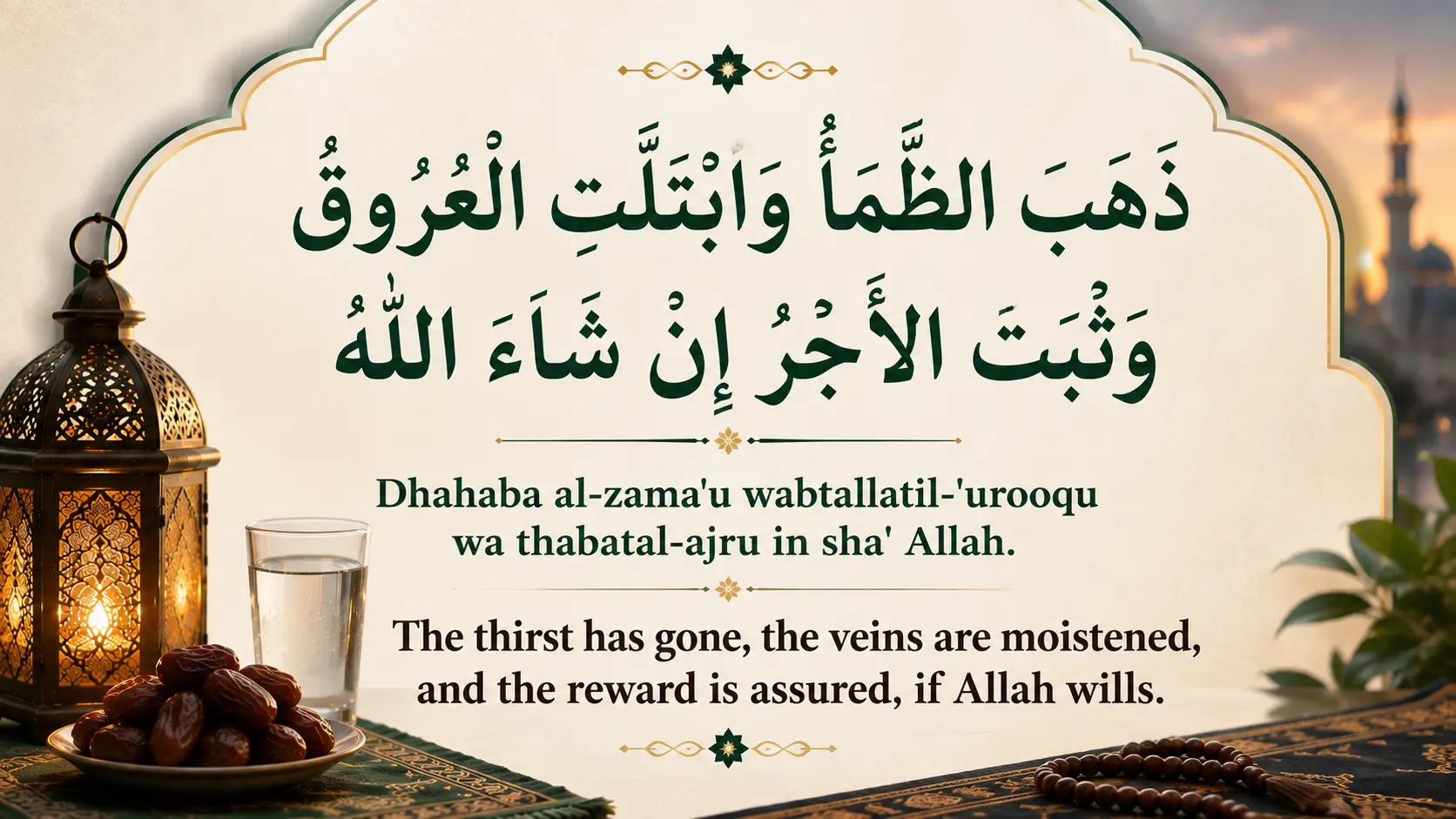
Abdullah ibn Umar (RA) reported that the Prophet Muhammad ﷺ would say these words when he broke his fast. The narration appears in Sunan Abi Dawud 2357, Book 14, Hadith 45, under the chapter on what is said when breaking the fast.
When to Say the Dua to Open Fast
The wording of this dua describes the thirst as having gone and the veins as having become moistened. The hadith also states that the Prophet ﷺ said it when he broke his fast. Therefore, it is appropriately recited at the time of breaking the fast.
The fasting period ends at sunset. Allah says in Surah Al-Baqarah 2:187 to complete the fast until nightfall. Therefore, do not eat or drink to break the fast before the fasting period ends.
Authentic Dua for Breaking Fast
The dua beginning "Dhahaba al-zama'u…" has direct hadith evidence for its use when opening or breaking a fast. Sunan Abi Dawud records the narration from Ibn Umar (RA), and Al-Albani grades the report Hasan (good).
This makes it an appropriate evidence-based supplication to learn when looking for an authentic dua for breaking the fast.
What Did the Prophet ﷺ Break His Fast With?
The Prophet Muhammad ﷺ would break his fast before prayer with fresh dates. If fresh dates were unavailable, he used dry dates, and if those were unavailable, he drank some water. This practice is reported from Anas ibn Malik (RA) in Sunan Abi Dawud 2356, graded Hasan Sahih by Al-Albani.
The dua and the food used to open the fast are therefore separate matters: the dua is a supplication, while dates or water are used to break the fast physically.
Does "Dua to Open Fast" Mean Starting or Breaking the Fast?
In this guide, opening the fast means ending or breaking the fast at Iftar.
Starting a fast is a separate matter related to niyyah (intention). It should not be confused with the dua recited when the fasting period ends.
This distinction matters because the dua to open the fast belongs to the Iftar context, while the intention to begin fasting is a separate matter. The intention associated with beginning the fast is explained separately in the dua to close fast guidance.
Dua to Open Fast in Ramadan
The dua to open the fast in Ramadan is the same as the authentic Iftar dua mentioned above. There is no separate prophetic supplication that must be recited only because the fast is being observed in Ramadan.
A Ramadan fast ends at sunset. The Qur'an instructs Muslims to complete the fast until nightfall in Surah Al-Baqarah 2:187.
Once sunset occurs, you may break the fast without unnecessary delay. Beyond fasting and Iftar, Muslims also share prayers for mercy, forgiveness and blessings throughout the holy month, sentiments commonly expressed through Ramadan wishes for family and friends.
Should You Make Dua Before Breaking Fast?
You can make personal dua before Iftar and ask Allah for forgiveness, guidance, mercy, provision, or any other permissible good.
However, personal supplications should not be presented as a specific prophetic dua before breaking fast unless there is reliable evidence for that wording.
The established "Dhahaba al-zama'u…" supplication covered in Part 1 is specifically reported as something the Prophet ﷺ said when he broke his fast.
Should You Delay Iftar to Recite the Dua?
No. Once sunset has occurred, there is no need to delay opening the fast to complete a dua first.
The Prophet Muhammad ﷺ said:
لَا يَزَالُ النَّاسُ بِخَيْرٍ مَا عَجَّلُوا الْفِطْرَ
Transliteration:
La yazalun-nasu bikhayrin ma 'ajjalul-fitr.
English Meaning:
"The people will remain upon goodness as long as they hasten to break the fast."
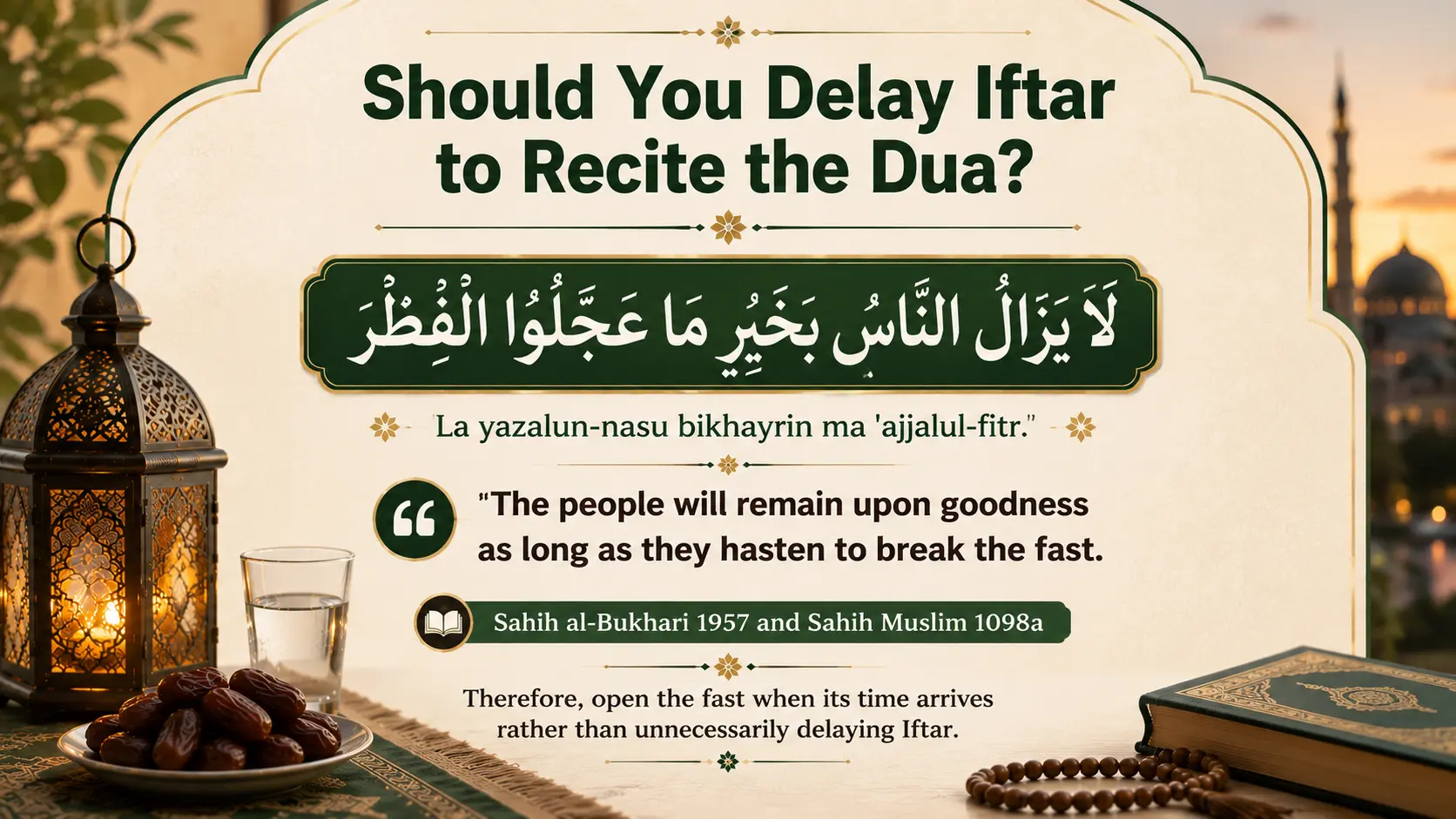
This is recorded in Sahih al-Bukhari 1957 and Sahih Muslim 1098a.
Therefore, open the fast when its time arrives rather than unnecessarily delaying Iftar.
Dua to Open Fast Outside Ramadan
The dua to open fast outside Ramadan does not require a different supplication. You can also recite the authentic Iftar dua when ending a voluntary fast.
This means you do not need separate opening fast duas simply because you are fasting outside Ramadan. The occasion may change, but the established supplication for breaking the fast does not need to be replaced with a new formula.
Dua to Open Fast in English
The English meaning of the authentic Iftar dua is:
"The thirst has gone, the veins are moistened, and the reward is assured, if Allah wills."
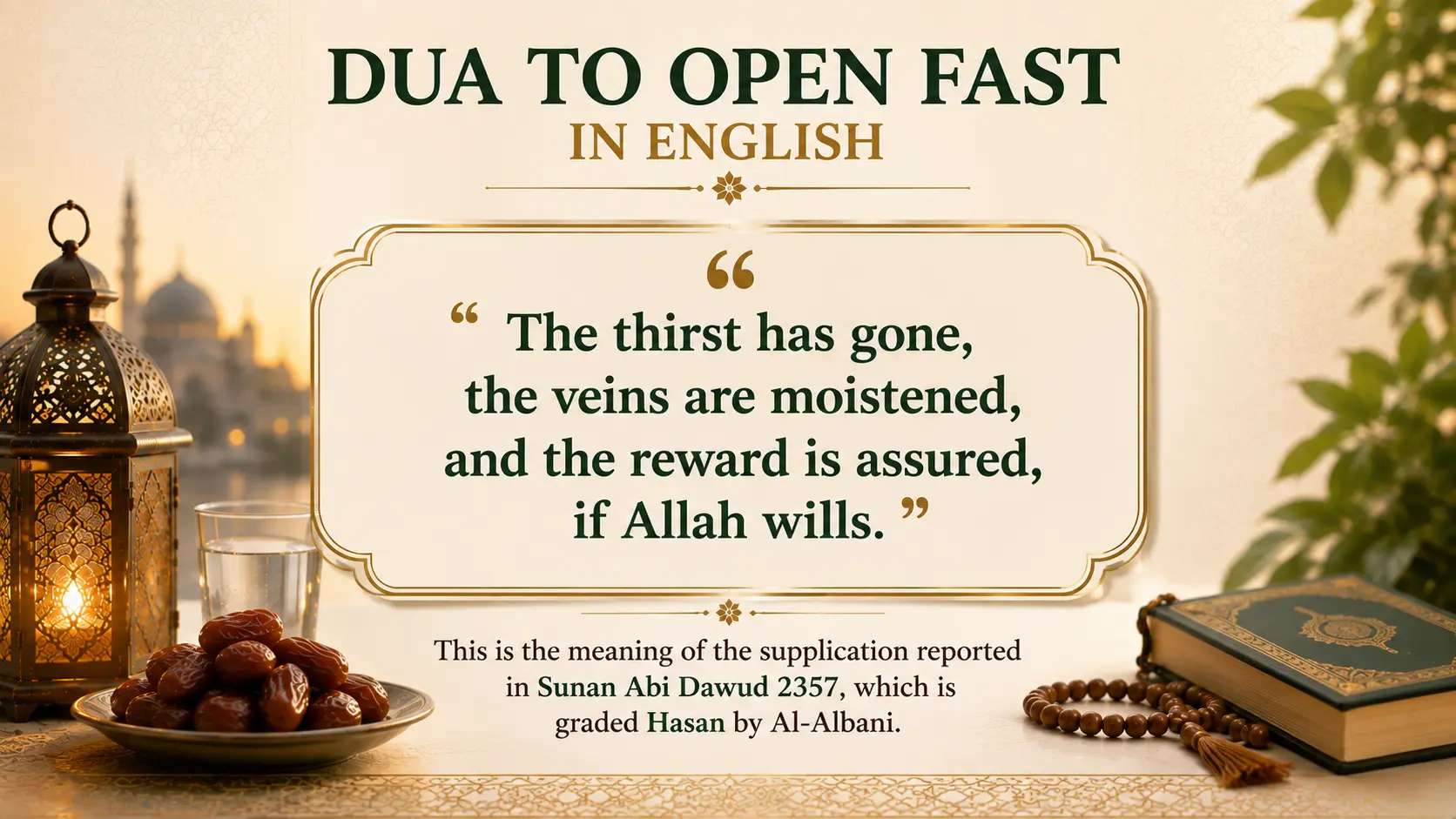
This is the meaning of the supplication reported in Sunan Abi Dawud 2357, which is graded Hasan by Al-Albani.
A Muslim may also make personal dua in English or another language they understand. The English translation, however, should be understood as the meaning of the Arabic prophetic supplication, rather than a separate prophetic wording.
Opening Your Fast According to the Sunnah
The dua to open the fast reported from the Prophet Muhammad ﷺ is "Dhahaba al-zama'u wabtallatil-'urooqu wa thabatal-ajru in sha' Allah." Recite it when breaking the fast to thank Allah and seek His reward.
Once sunset occurs, Muslims should open the fast without unnecessary delay. You can use the same established supplication when breaking a Ramadan or voluntary fast, so you don't need to memorise different Iftar duas for different fasting days.
Remember that opening the fast at Iftar and making the intention to begin a fast are separate matters. Alongside fasting guidance, Hajj Umrah Planner provides Islamic knowledge and practical guidance for Muslims seeking clear information about worship and faith.