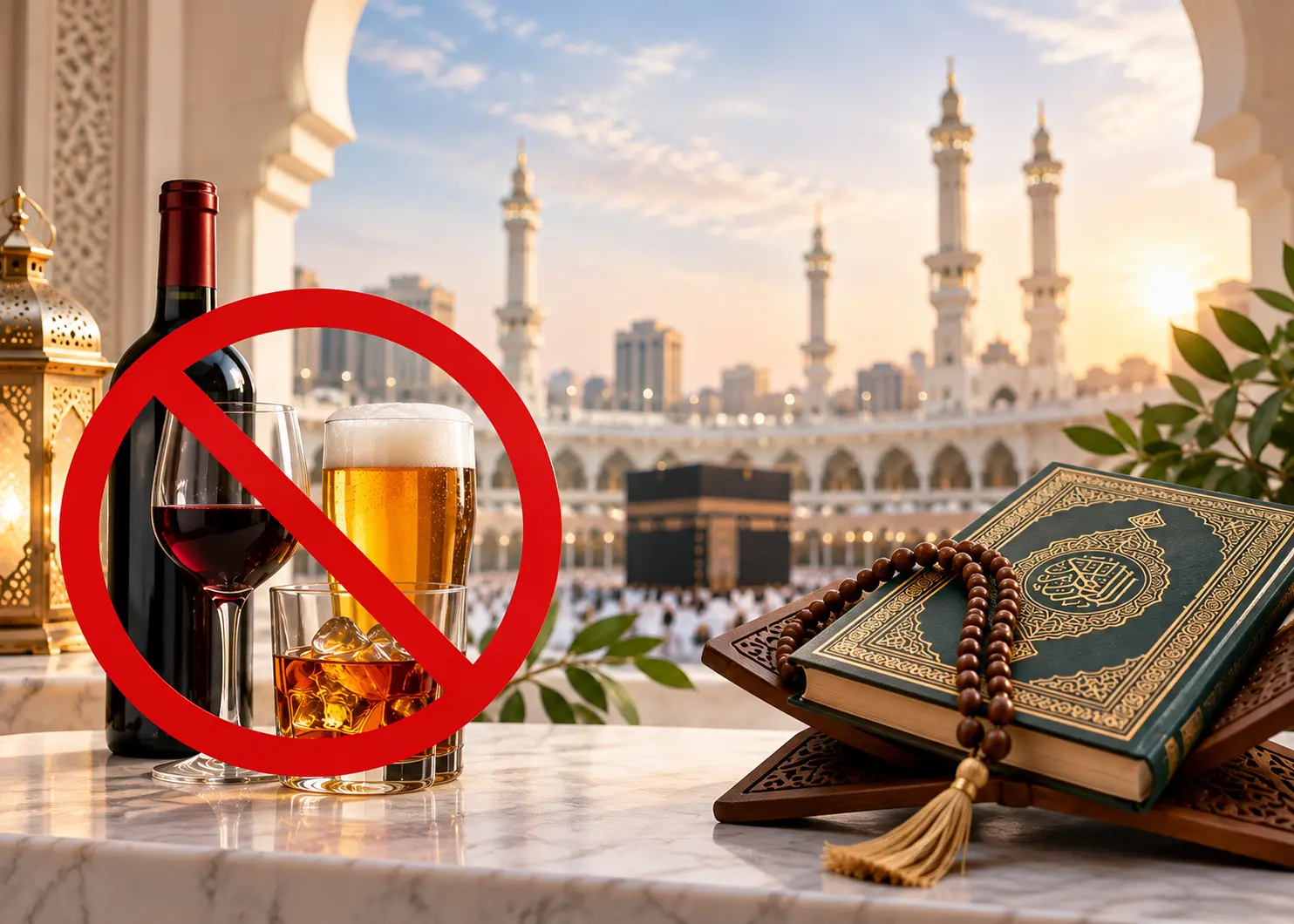
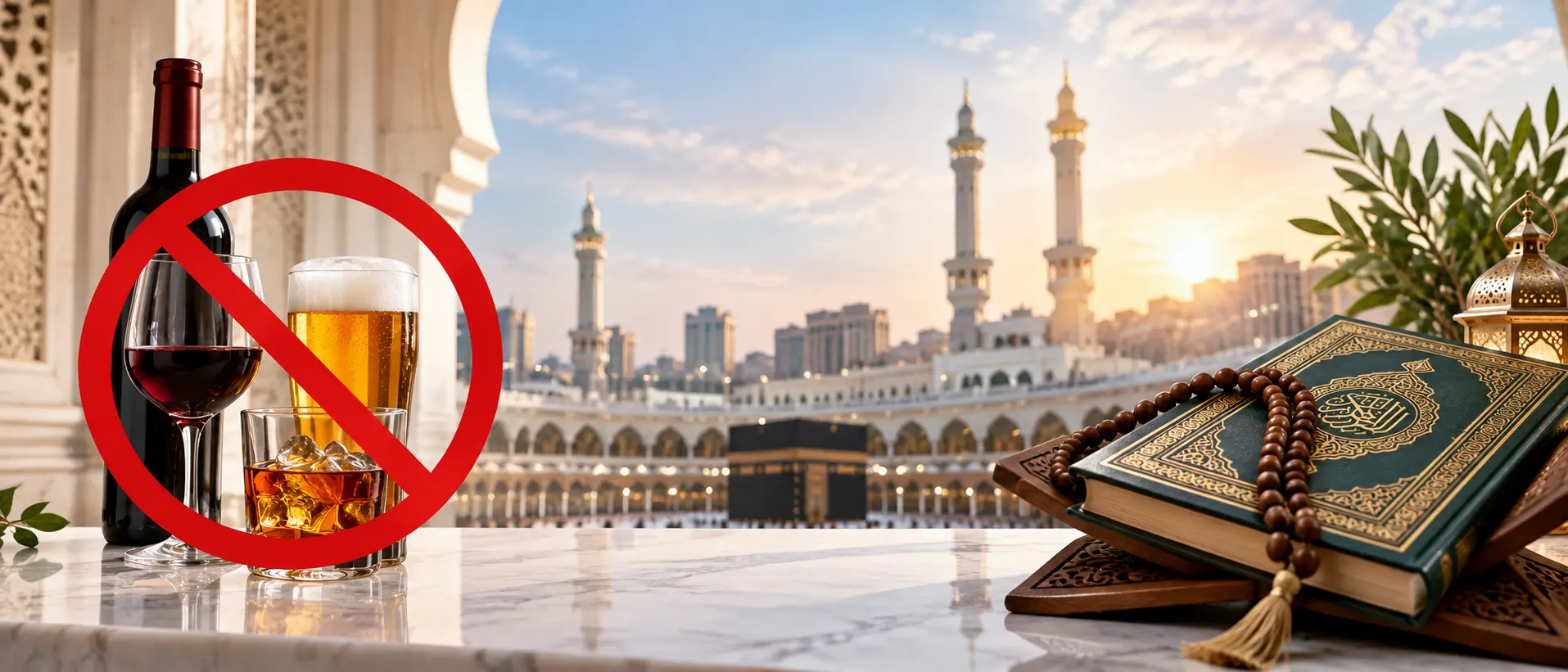
No, Muslims are not allowed to drink intoxicating alcohol in Islam. The Qur'an instructs believers to avoid intoxicants, and Prophet Muhammad ﷺ taught that every intoxicant is forbidden. This ruling applies to alcoholic drinks such as beer, wine and spirits, not just to drinking until someone becomes drunk. Hajj Umrah Planner provides further guidance on Islamic beliefs and everyday practices.
Some Muslims do drink alcohol in practice, but their personal choices do not change the Islamic ruling.
Why Don't Muslims Drink Alcohol?
Muslims avoid alcohol because Allah prohibits intoxicants in the Qur'an. The prohibition is not simply a cultural tradition or a rule that applies only during Ramadan.
In Surah Al-Ma'idah 5:90–91, the Qur'an instructs believers to avoid intoxicants and explains that they can create hostility, interfere with the remembrance of Allah and turn people away from prayer.
The central reason Muslims do not drink alcohol is therefore obedience to Allah's command.
What Does the Qur'an Say About Alcohol?
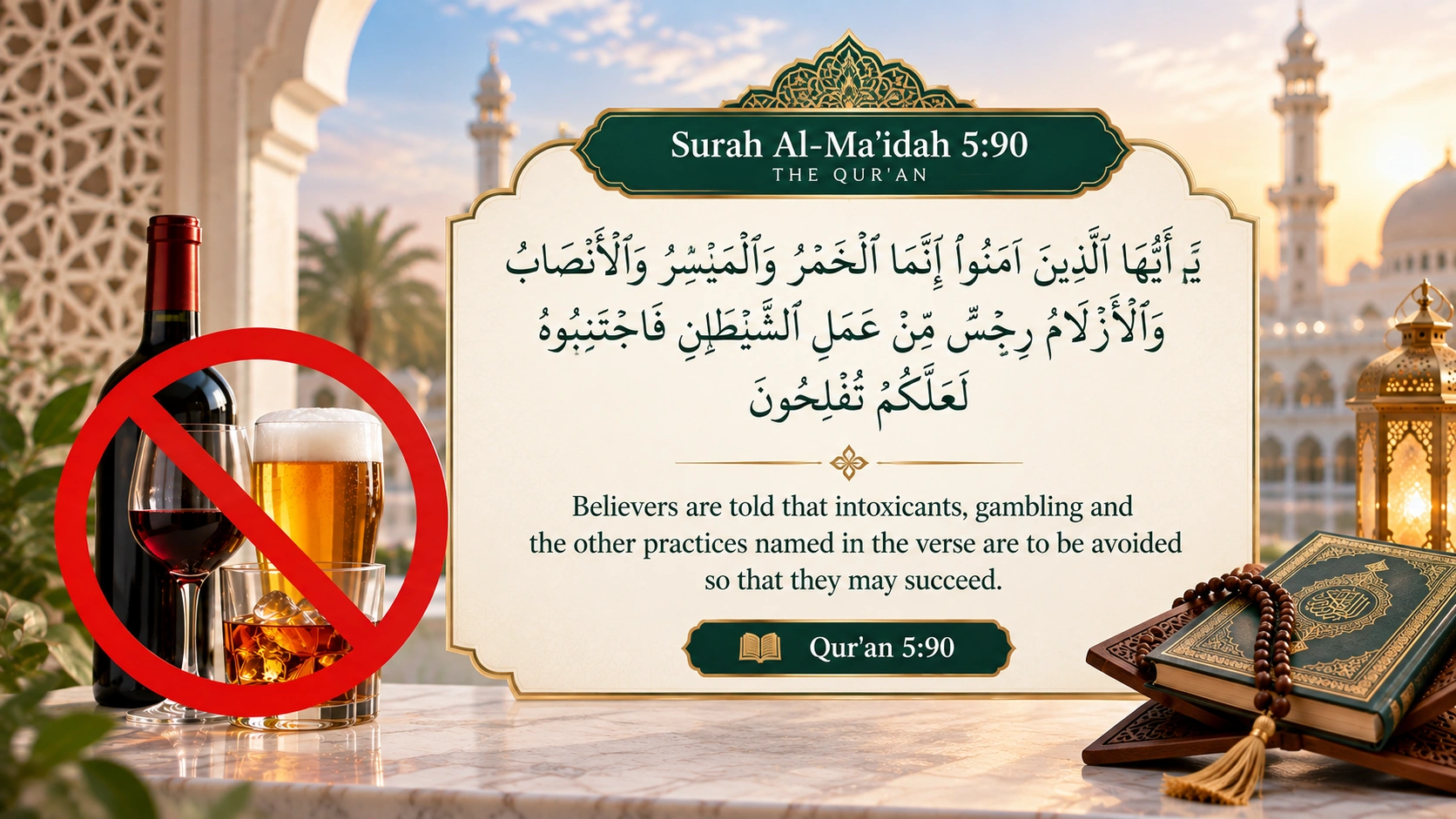
The Qur'an addresses intoxicants in three key passages:
Qur'an verse | Main teaching |
Intoxicants and gambling have some benefit, but their sin is greater than their benefit. | |
Believers must not approach prayer while intoxicated. | |
Believers are instructed to avoid intoxicants. |
These passages are commonly explained as stages in the Qur'anic guidance on alcohol. Surah Al-Ma'idah 5:90–91 contains the explicit instruction to avoid intoxicants.
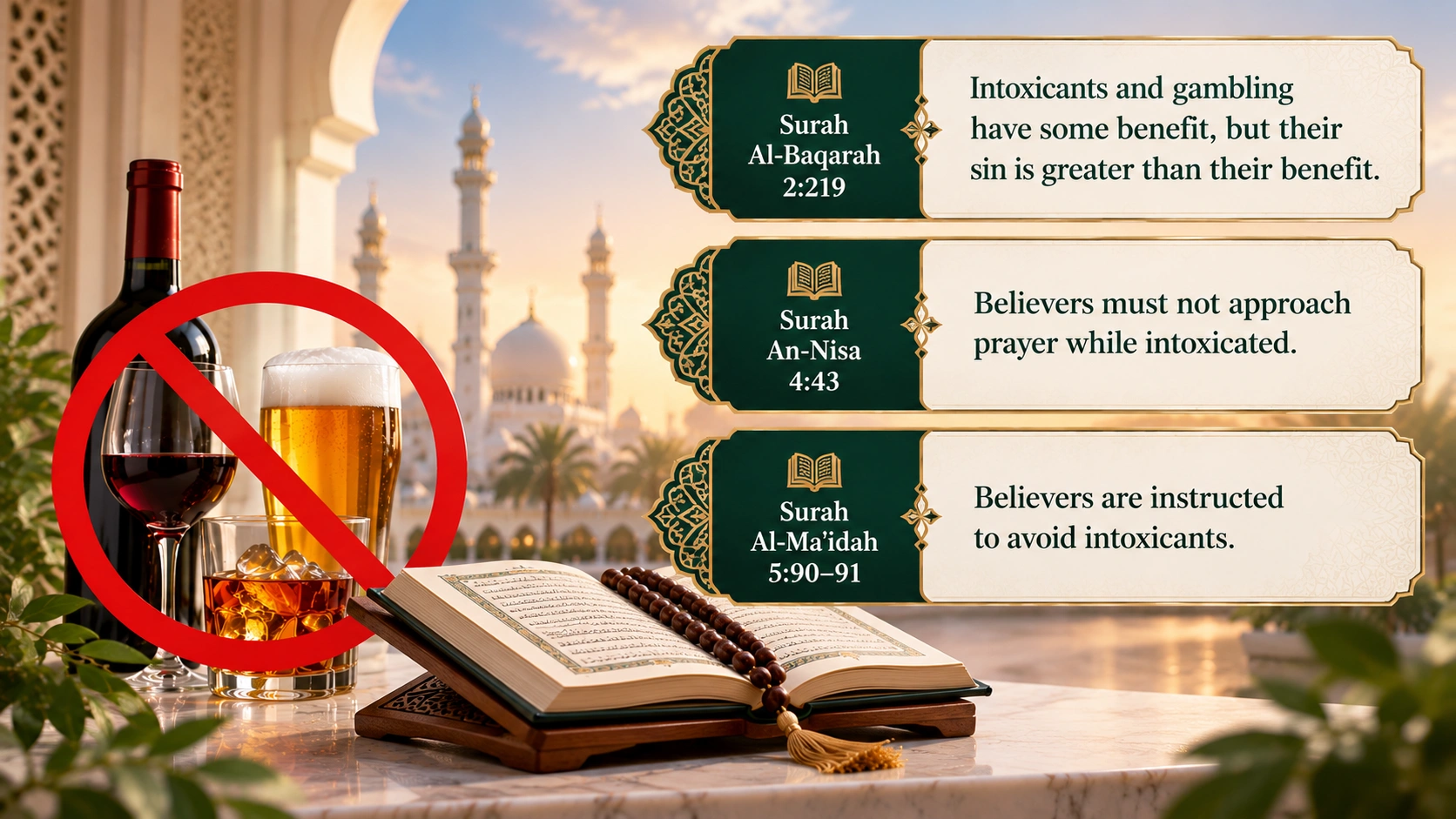
The Qur'anic Instruction to Avoid Intoxicants
Arabic — Surah Al-Ma'idah 5:90 (relevant passage)
يَا أَيُّهَا الَّذِينَ آمَنُوا إِنَّمَا الْخَمْرُ وَالْمَيْسِرُ وَالْأَنْصَابُ وَالْأَزْلَامُ رِجْسٌ مِنْ عَمَلِ الشَّيْطَانِ فَاجْتَنِبُوهُ لَعَلَّكُمْ تُفْلِحُونَ
English meaning: Believers are told that intoxicants, gambling and the other practices named in the verse are to be avoided so that they may succeed.
Reference: Qur'an 5:90.
What Did Prophet Muhammad ﷺ Say About Alcohol?
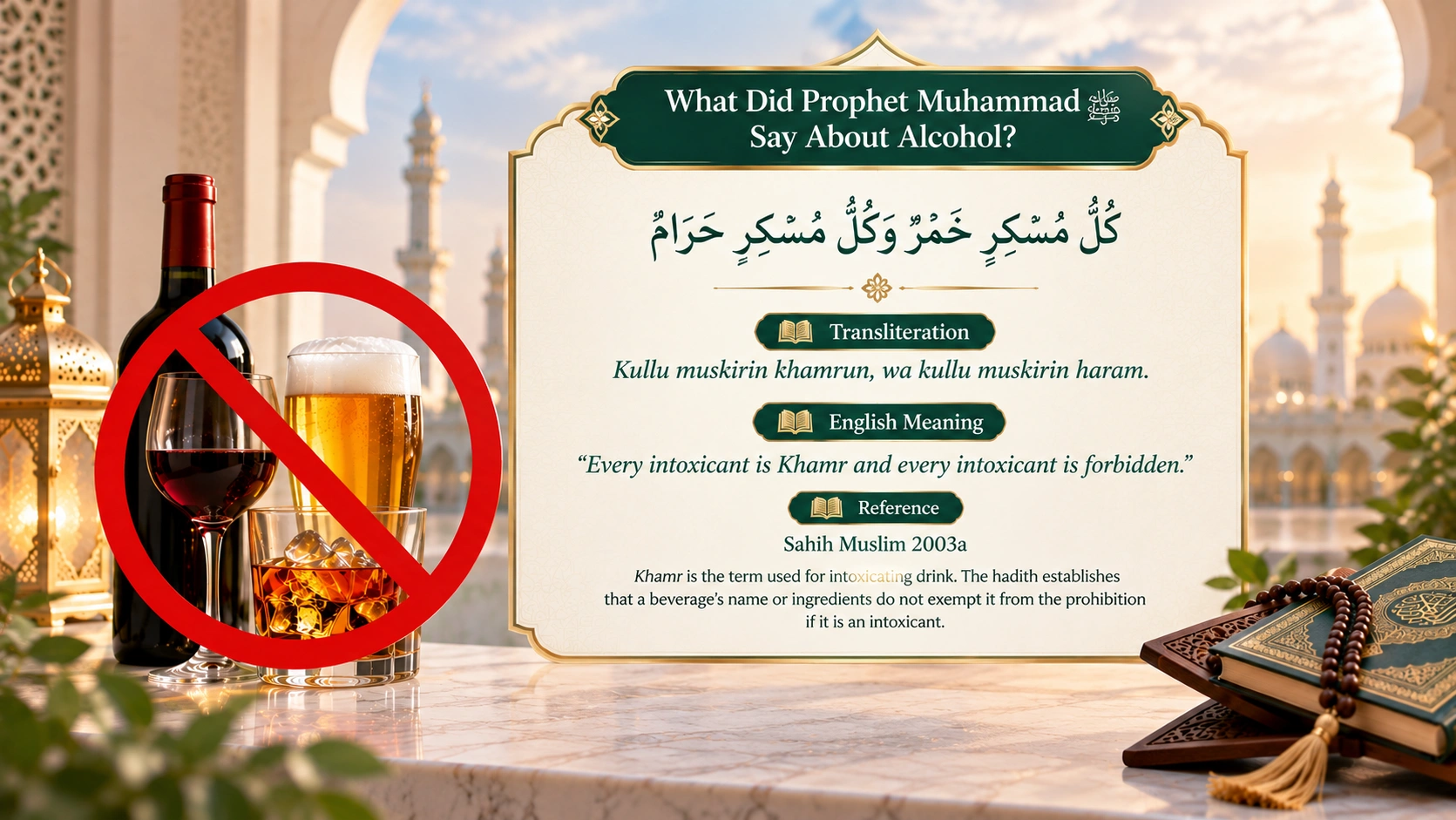
The Prophet Muhammad ﷺ explained that the prohibition covers intoxicants generally, rather than only a particular drink.
Arabic
كُلُّ مُسْكِرٍ خَمْرٌ وَكُلُّ مُسْكِرٍ حَرَامٌ
Transliteration
Kullu muskirin khamrun, wa kullu muskirin haram.
English meaning
“Every intoxicant is Khamr and every intoxicant is forbidden.”
Reference: Sahih Muslim 2003a.
Khamr is the term used for intoxicating drink. The hadith establishes that a beverage's name or ingredients do not exempt it from the prohibition if it is an intoxicant.
Can Muslims Drink a Small Amount of Alcohol Without Getting Drunk?
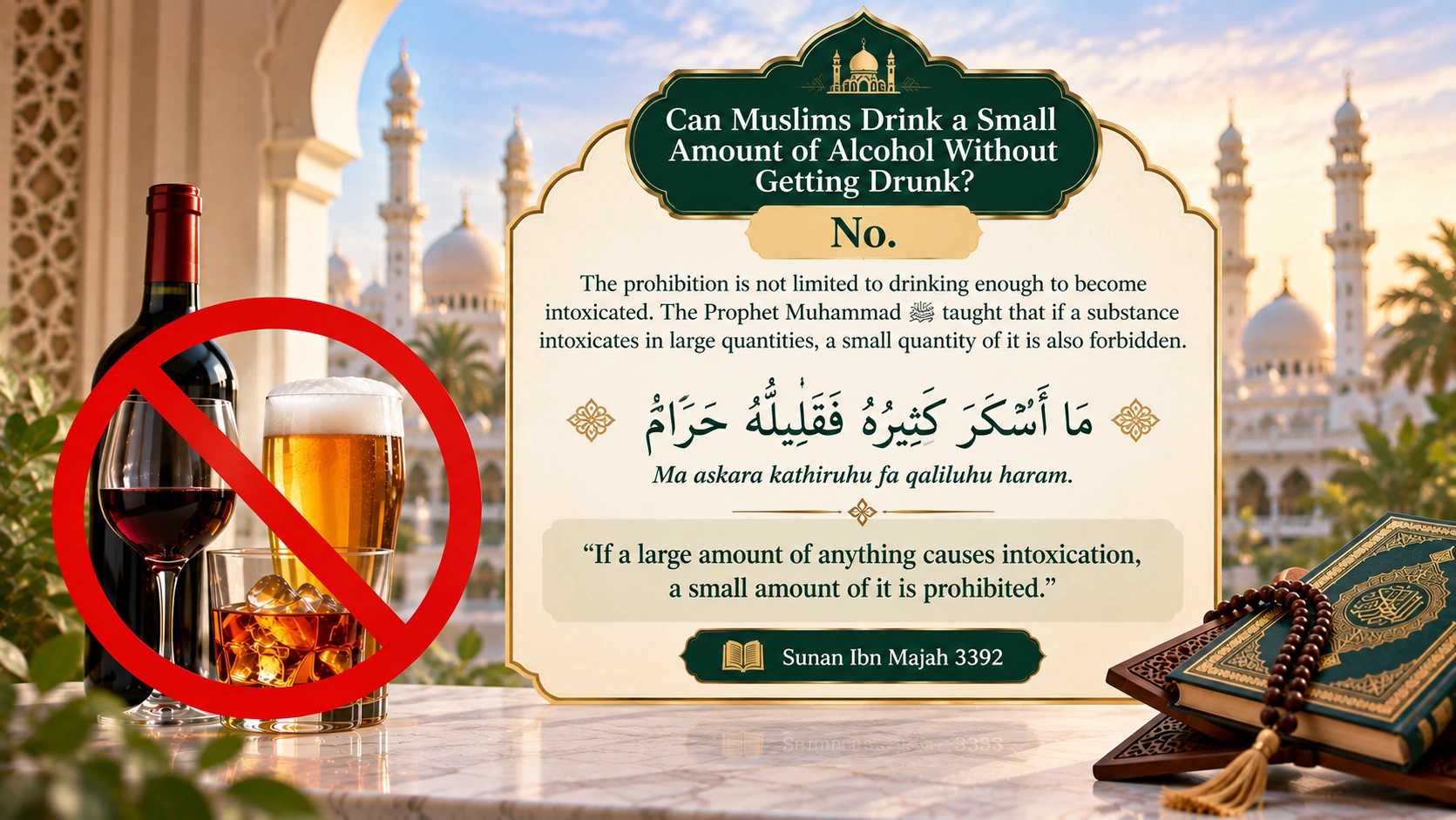
No. In Islam, the prohibition is not limited to drinking enough to become intoxicated. The Prophet Muhammad ﷺ taught that if a substance intoxicates in large quantities, a small quantity of it is also forbidden.
Arabic
مَا أَسْكَرَ كَثِيرُهُ فَقَلِيلُهُ حَرَامٌ
Transliteration
Ma askara kathiruhu fa qaliluhu haram.
English meaning
“If a large amount of anything causes intoxication, a small amount of it is prohibited.”
Reference: Sunan Ibn Majah 3392.
This means that having only a sip or a single glass of an intoxicating drink does not make it permissible.
Can Muslims Drink Beer, Wine or Spirits?
No. The prohibition applies to intoxicating drinks regardless of their name, origin or alcohol percentage.
Drink | Islamic ruling |
Alcoholic beer | Forbidden |
Red, white or other alcoholic wine | Forbidden |
Whisky, vodka, rum and tequila | Forbidden |
Alcoholic champagne and cider | Forbidden |
A drink does not become permissible simply because it is consumed with food, at a celebration or in a small serving.
Can Muslims Drink Non-Alcoholic Beer?
Not every product labelled “non-alcoholic” has the same ruling. Products sold as alcohol-free, 0.0% or dealcoholised beer can differ in their ingredients, production methods and residual alcohol content.
Before choosing a product, check its ingredients and any reliable halal certification. For a specific drink, consult a trusted scholar or halal-certification body rather than assuming its marketing label establishes that it is halal.
Can Muslims Drink Alcohol-Free Wine or Champagne?
The same product-specific caution applies to alcohol-free wine and champagne. Check how the drink is made, whether it contains residual alcohol and whether a trusted halal authority has assessed it.
A “0.0%” label and a “non-alcoholic” label should not automatically be treated as identical.
Can Muslims Drink Kombucha or Other Fermented Drinks?
The answer depends on the specific drink. Fermentation can produce alcohol, and the amount may vary by product and production conditions.
Kombucha, kefir and other fermented beverages should therefore not all be given one blanket ruling. Check the ingredients, alcohol content and relevant halal guidance for the particular product.
Can Muslims Drink Mocktails?
Yes, a mocktail made with permissible, non-intoxicating ingredients can be consumed. However, the word mocktail does not guarantee that every ingredient is suitable. Check for added spirits, alcoholic flavourings or other questionable ingredients.
Do Some Muslims Drink Alcohol?
Yes, some Muslims drink alcohol despite its prohibition in Islam. Religious teachings and individual behaviour are not always the same. It would therefore be inaccurate to say that every Muslim abstains from alcohol—or that drinking alcohol is permitted because some Muslims do it.
Do Turkish, Bosnian or Pakistani Muslims Drink Alcohol?
Some individuals in these communities may drink alcohol, while others abstain. Nationality alone cannot tell you whether a person drinks or how closely they follow Islamic teachings.
There is no reliable percentage to give for all Muslims worldwide without specifying a survey, its date and the population studied.
Can Muslims Drink Alcohol During Ramadan, Eid or at Weddings?
No. Ramadan, Eid and weddings do not create exceptions to the Islamic prohibition on intoxicating alcohol. During Ramadan, Muslims also make an intention to fast; our guide to the dua to close fast explains this separately.
Ramadan also has a separate fasting rule: Muslims who are fasting abstain from food and drink, including water, from dawn until sunset. They may drink water outside fasting hours and recite the dua to open fast when breaking their fast. Qur'an 2:187
What Happens if a Muslim Drinks Alcohol?
Drinking alcohol is a sin under Islamic teachings, but committing that sin does not automatically mean a person is no longer Muslim. A Muslim who has drunk alcohol can stop, seek forgiveness and sincerely repent.
The Qur'an encourages people who have wronged themselves not to despair of Allah's mercy. Qur'an 39:53
Someone who drinks heavily or regularly may also need practical support. If a person may be physically dependent on alcohol, they should seek medical advice before stopping suddenly, because withdrawal can be dangerous.
Can Muslims Drink Alcohol for Medical Reasons?
A genuine medical need requires an individual assessment; it is not a general permission to drink alcohol. The type of product, its purpose and the availability of suitable alternatives all matter.
If a prescribed medicine contains alcohol, ask the prescribing clinician or pharmacist whether an appropriate alternative is available. A trusted, qualified scholar can advise on the religious question using the details of that specific case. Do not stop or change prescribed treatment without medical guidance.
Final Thoughts on Alcohol in Islam
Muslims are not permitted to drink intoxicating alcohol under Islamic teachings. The prohibition applies to alcoholic beer, wine and spirits, including small servings. Some Muslims may drink in practice, but individual behaviour does not change the religious ruling. Products marketed as non-alcoholic require assessment of the specific product rather than an assumption based on the label.