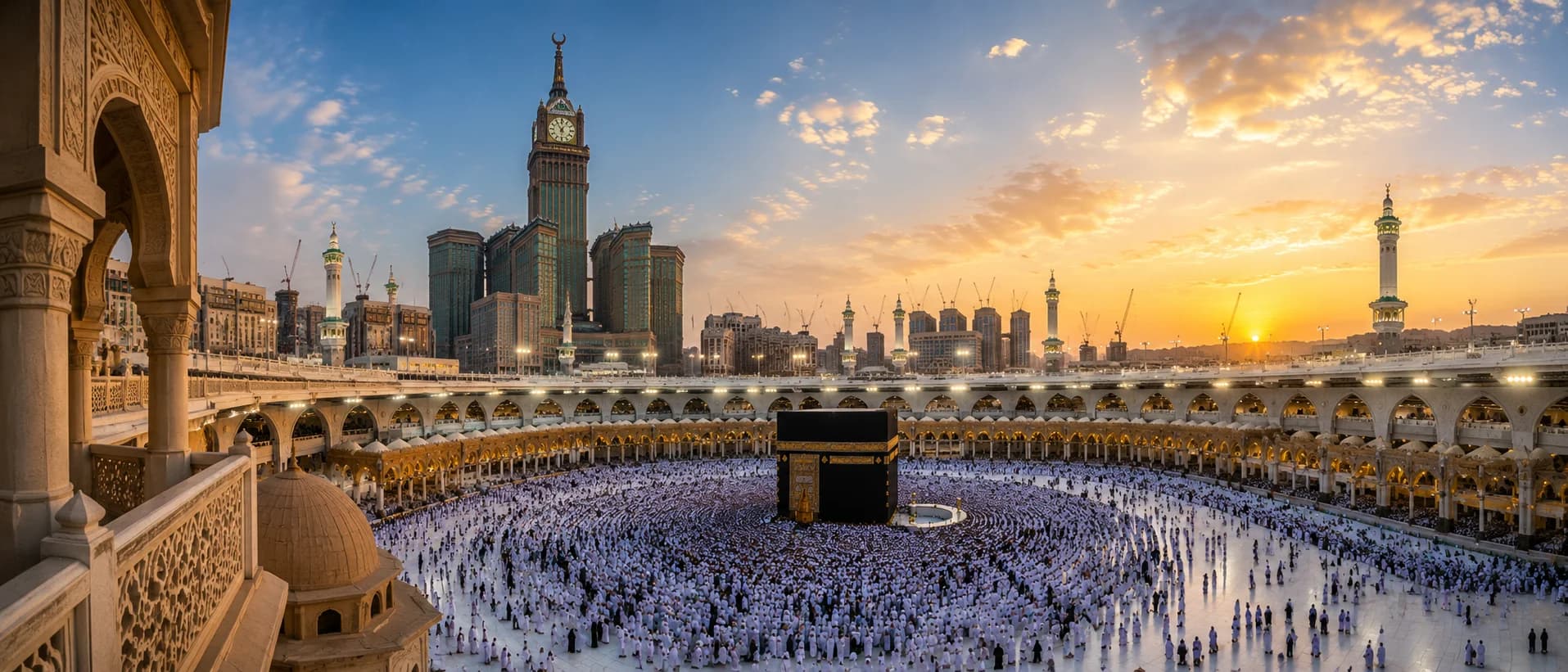
Umrah usually takes about 2 to 4 hours once you begin the main rituals. The exact time depends on crowd levels, walking speed, prayer times, physical ability, and how long you spend making dua and performing voluntary worship.
A straightforward Umrah may be completed in about 2 hours during quieter periods, while 3 to 4 hours is a more practical estimate for many pilgrims. During Ramadan, peak seasons, or particularly busy periods in Masjid al-Haram, completing Umrah can take considerably longer.
How Long Does It Take to Perform Umrah?
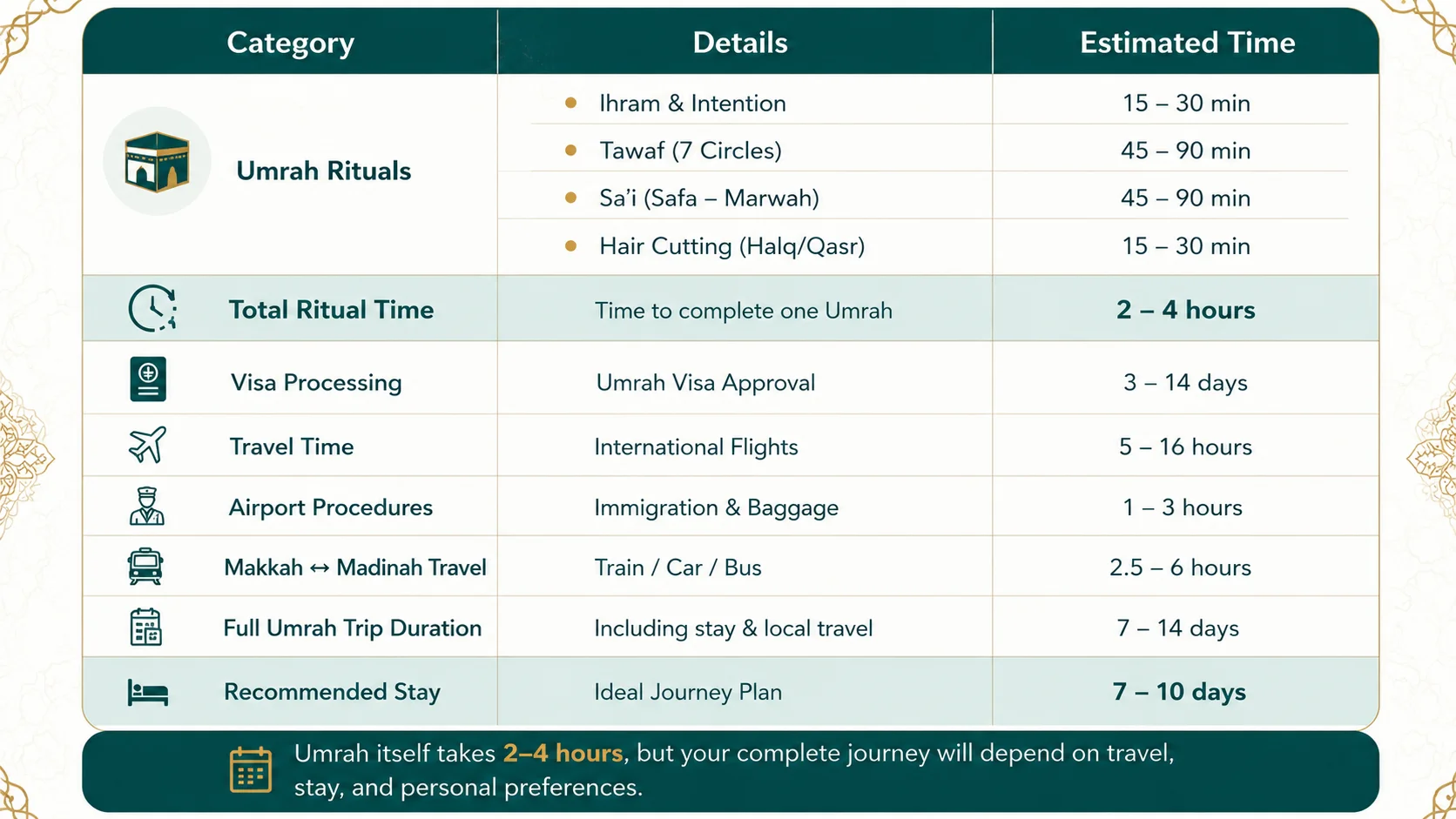
The main Umrah rituals are Ihram and intention, Tawaf, Sa'i between Safa and Marwah, and Halq or Taqsir. Each stage takes a different amount of time.
Here is a practical estimate:
Umrah Stage | Estimated Time |
Ihram and intention | 15–30 minutes |
Tawaf around the Ka'bah | 45–90 minutes |
Sa'i between Safa and Marwah | 45–90 minutes |
Halq or Taqsir | 15–30 minutes |
Estimated total | 2–4 hours |
These timings are estimates, not fixed religious time limits. A pilgrim may complete the rituals faster or take much longer, depending on conditions inside Masjid al-Haram.
Can Umrah Be Completed in 2 Hours?
Yes, it is possible to complete Umrah in around 2 hours, particularly when Masjid al-Haram is less crowded and the pilgrim can perform Tawaf and Sa'i without significant delays.
However, pilgrims should not rush their worship to finish within a particular time. Umrah is an act of worship, so allow enough time to perform each ritual properly and peacefully.
For first-time pilgrims, older adults, families with children, or anyone who needs regular breaks, allowing 3 to 4 hours or more is more realistic.
What Counts as Completing Umrah?
Umrah is completed after performing its required rites in the correct sequence. In practical terms, the journey through the rituals includes:
Entering the state of Ihram with the intention to perform Umrah.
Performing Tawaf around the Ka'bah.
Performing Sa'i between Safa and Marwah.
Completing Halq or Taqsir by shaving or shortening the hair, as applicable.
After the final hair-cutting step, the pilgrim exits the state of Ihram, and the Umrah is complete.
So when someone asks, "How long does one Umrah take?", the usual 2–4 hour estimate refers to completing these Umrah rituals, not the entire trip to Saudi Arabia.
Is There a Fixed Time Limit for Completing Umrah?
There is no standard 2-hour, 3-hour, or 4-hour religious time limit within which every pilgrim must complete Umrah.
The actual duration varies from person to person. Someone visiting during a quiet period may finish relatively quickly, while another pilgrim performing Umrah during Ramadan or a crowded period may need several additional hours.
For planning purposes, 2–4 hours is a useful general estimate. Still, pilgrims should keep their schedule flexible and prioritise performing the rituals correctly rather than trying to complete them against the clock.
How Long Does Each Step of Umrah Take?
The 2–4 hour total Umrah time is mainly spent performing Tawaf and Sa'i. Ihram preparation and hair cutting generally take less time. However, each stage can vary based on crowds, walking speed, mobility, and waiting times.
1. Ihram and Intention: Around 15–30 Minutes
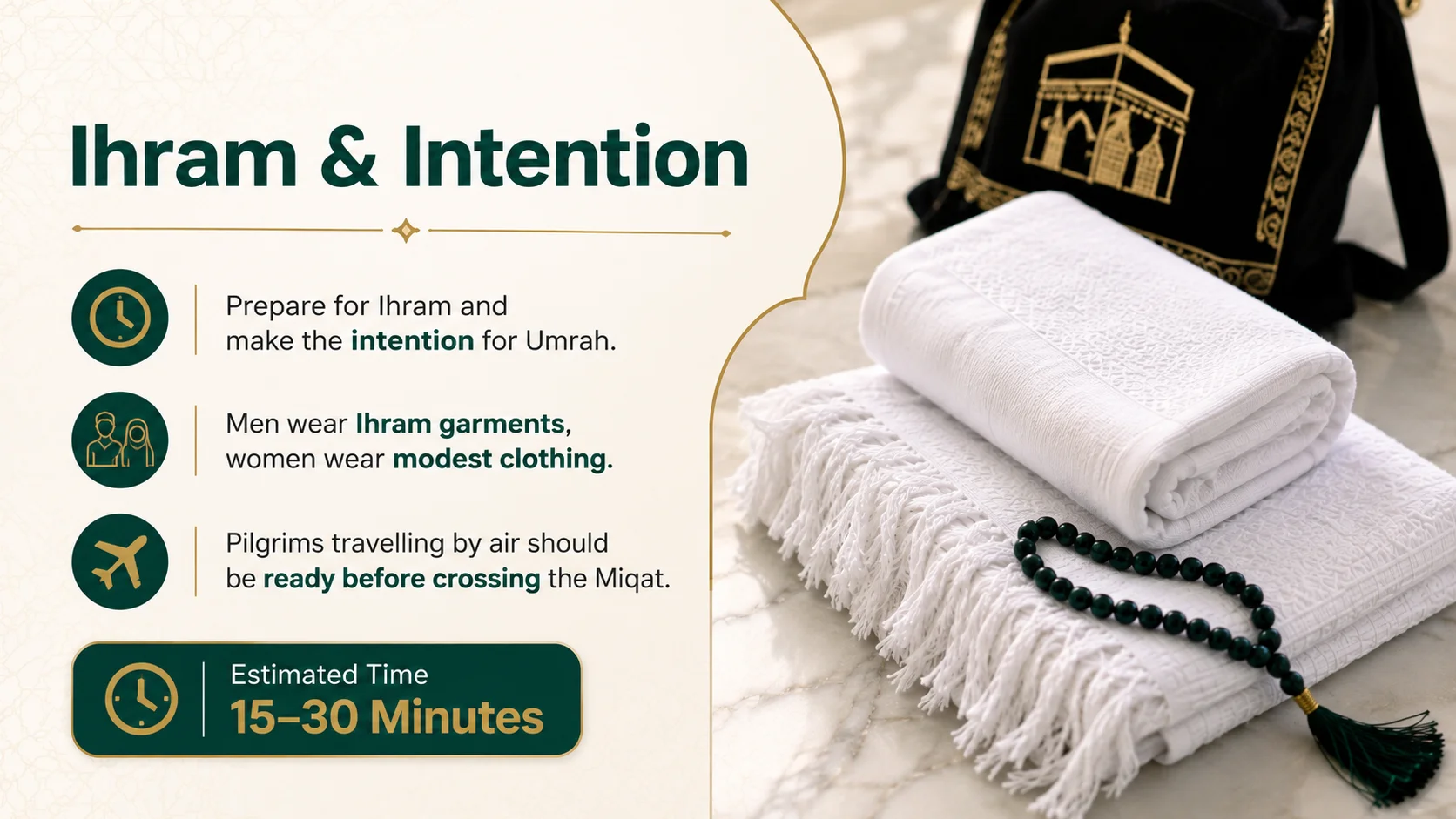
Preparing for Ihram generally takes around 15–30 minutes, although it can take longer depending on where and how you prepare.
Before crossing the relevant Miqat, a pilgrim prepares for Ihram and makes the intention for Umrah. Men wear the prescribed Ihram garments, while women wear permissible modest clothing and enter Ihram with the intention for Umrah.
Pilgrims travelling by air should prepare in advance so they are ready to enter Ihram before crossing the Miqat.
Estimated time: 15–30 minutes
2. Tawaf Around the Ka'bah: Around 45–90 Minutes
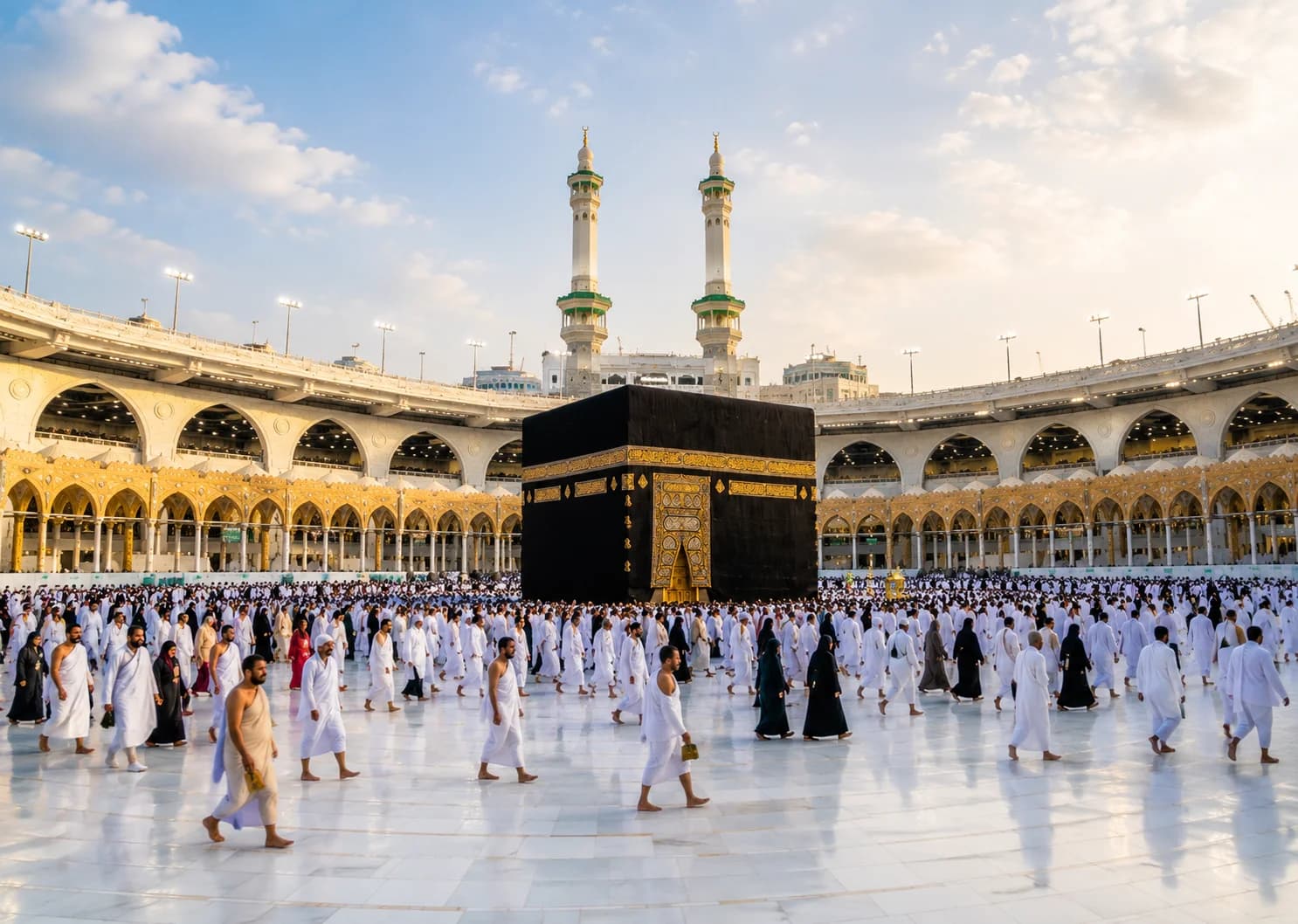
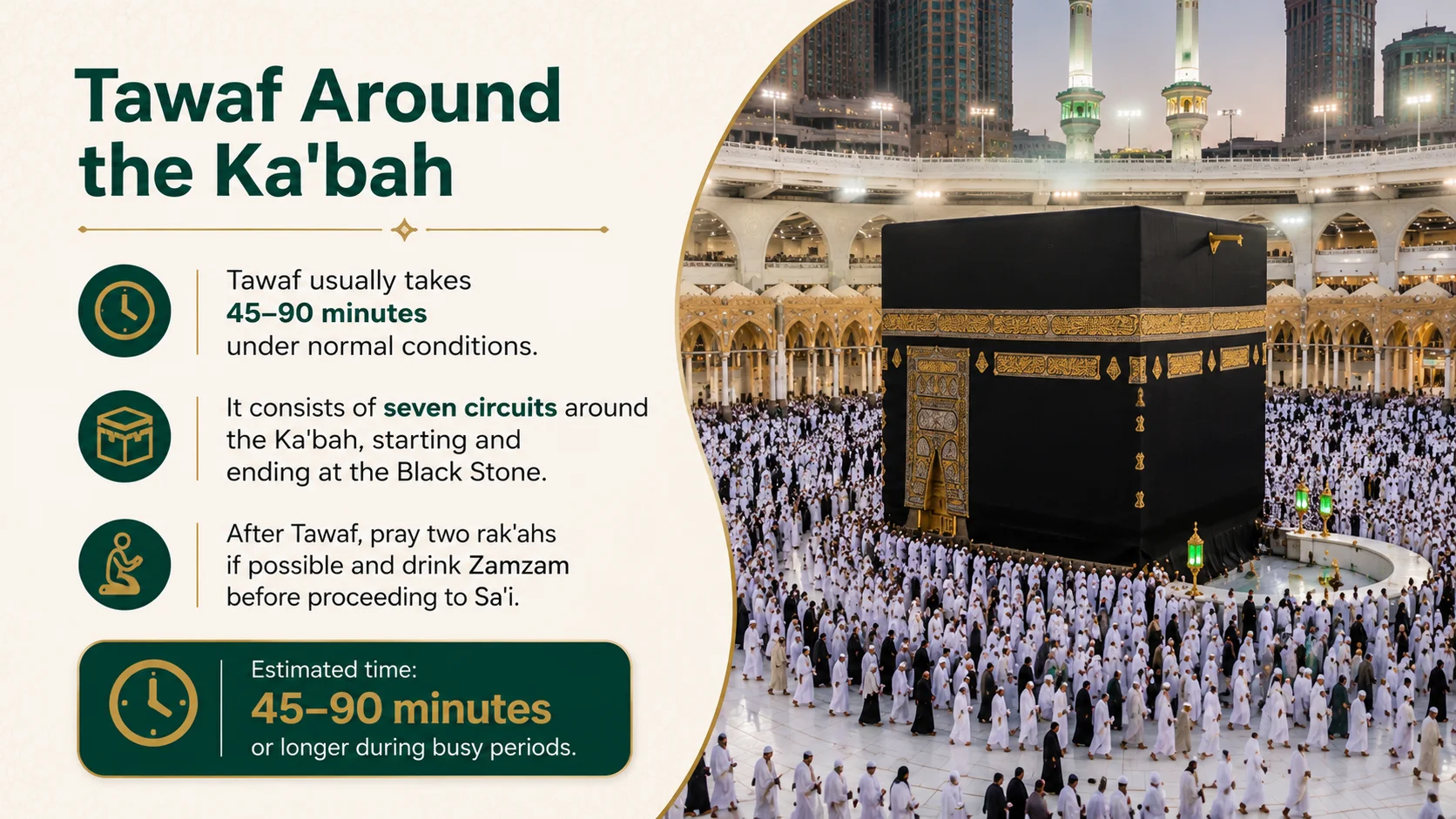
Tawaf usually takes around 45–90 minutes under normal conditions. It consists of completing seven circuits around the Ka'bah, beginning and ending in line with the Black Stone. Pilgrims may also make personal supplications and recite Tawaf Duas during the circuits.
The actual time can vary considerably. During quieter periods, you may complete the seven circuits more quickly. During Ramadan, weekends, prayer times, or other busy periods, Tawaf can take significantly longer.
Your position in the Mataf also affects the duration. A wider circuit naturally involves a longer walking distance than a circuit closer to the Ka'bah.
After Tawaf, pilgrims normally pray two rak'ahs, where possible without obstructing others. They may drink Zamzam before proceeding to Sa'i.
Estimated time: 45–90 minutes or longer during busy periods
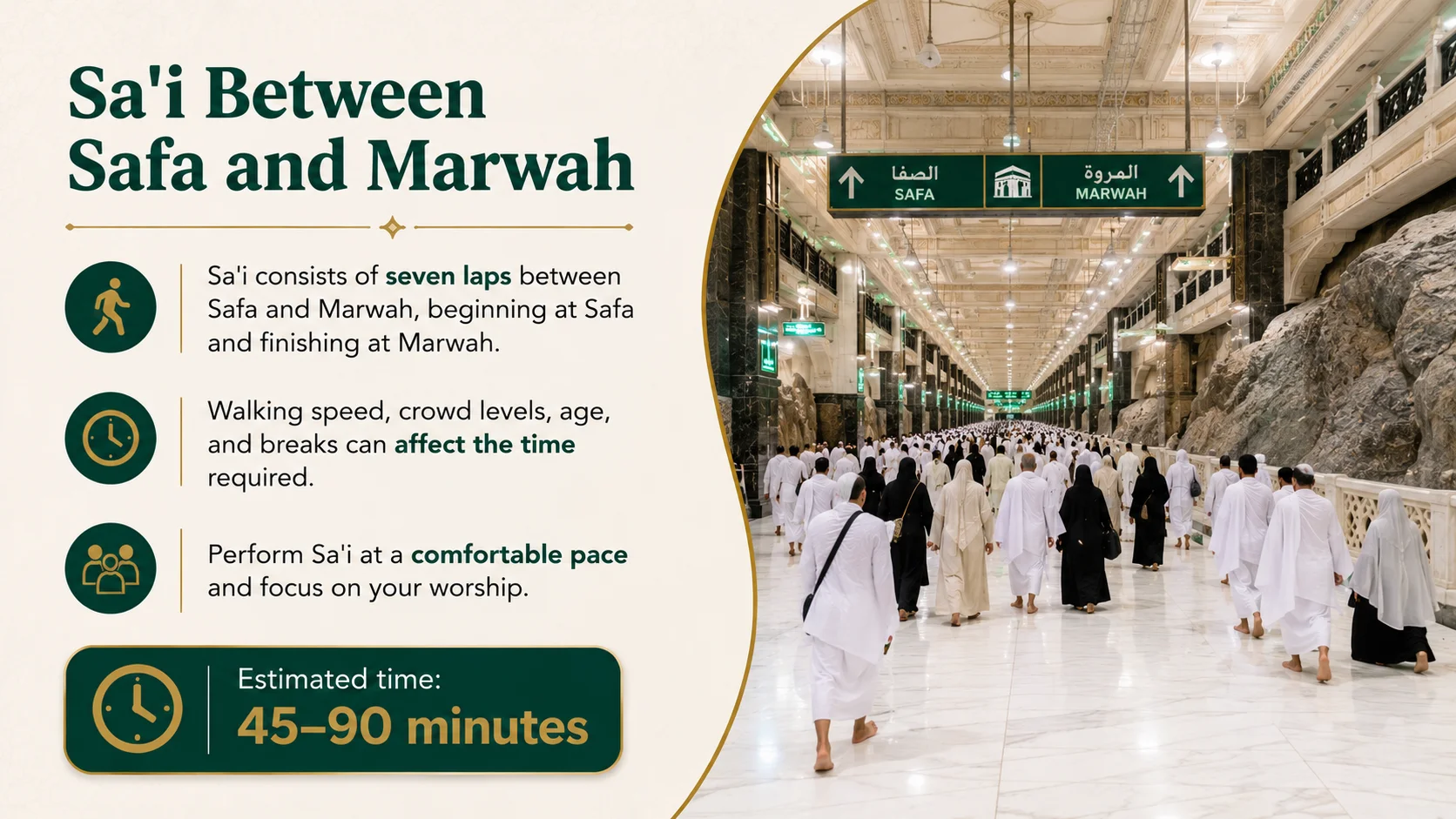
3. Sa'i Between Safa and Marwah: Around 45–90 Minutes
Sa'i generally takes around 45–90 minutes and consists of seven laps between Safa and Marwah, beginning at Safa and finishing at Marwah.
Walking speed strongly affects the total time. A healthy adult walking continuously may complete Sa'i relatively quickly. At the same time, elderly pilgrims, families with children, wheelchair users, or anyone who needs regular breaks may take longer.
Crowd levels can also slow movement, particularly during busy Umrah periods.
Pilgrims should perform Sa'i at a comfortable pace rather than rushing simply to reduce the total duration of their Umrah.
Estimated time: 45–90 minutes
4. Halq or Taqsir: Around 15–30 Minutes
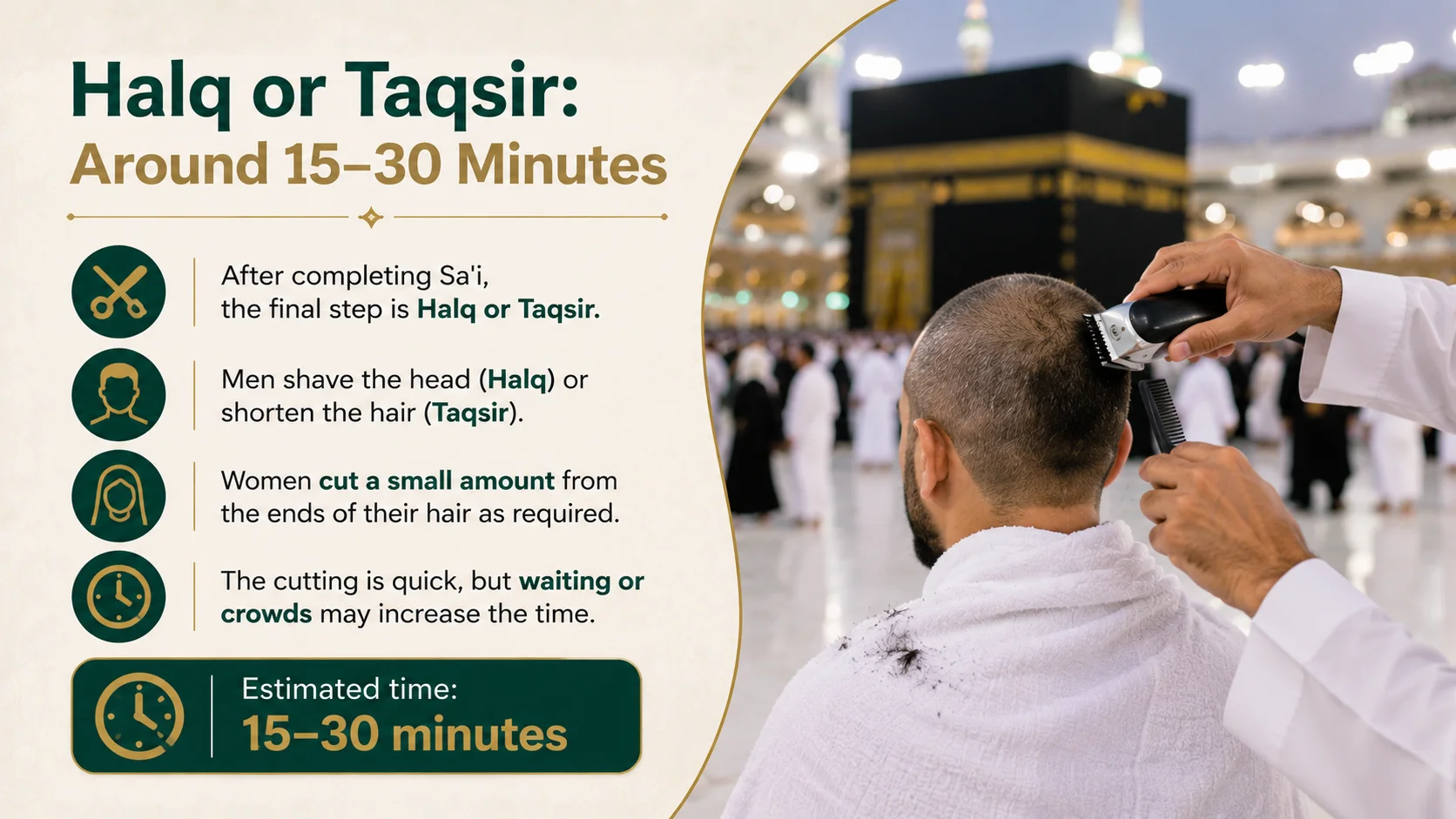
After completing Sa'i, the final step is Halq or Taqsir.
Men complete Halq by shaving the head or Taqsir by shortening the hair. Women complete Taqsir by cutting a small amount from the ends of their hair in accordance with the requirements applicable to them.
The cutting itself takes only a short time. However, reaching an appropriate place or barber and waiting during crowded periods can increase the overall duration.
Once this step has been completed correctly, the pilgrim exits the state of Ihram, and the Umrah is complete.
Estimated time: 15–30 minutes
Total Time to Complete One Umrah
When you combine the estimated duration of each stage, one Umrah commonly takes around 2–4 hours.
Ritual | Typical Time |
Ihram and intention | 15–30 minutes |
Tawaf | 45–90 minutes |
Sa'i | 45–90 minutes |
Halq or Taqsir | 15–30 minutes |
Total estimated time | 2–4 hours |
Treat this as a planning estimate, not a guaranteed completion time. Waiting for Salah, heavy crowds, rest breaks, mobility needs, or temporary access arrangements can extend the total time.
How Long Does It Take to Do One Umrah Without Long Breaks?
If crowds are light and a healthy pilgrim performs the rituals continuously without lengthy breaks, one Umrah may take about 2 hours.
A more comfortable allowance, especially for someone performing Umrah for the first time, is 3–4 hours. During particularly crowded periods, pilgrims should expect the rituals to take longer.
The goal should always be to perform Umrah correctly and with sincerity, rather than trying to finish as quickly as possible.
What Can Make Umrah Take Longer?
Although Umrah itself commonly takes around 2–4 hours, there is no guaranteed completion time. Crowd levels, prayer times, physical ability, weather, rest breaks, and the time of year can all affect how long it takes to perform Umrah.
Understanding these factors can help you allow enough time without feeling pressured to rush your worship.
Crowd Levels in Masjid al-Haram
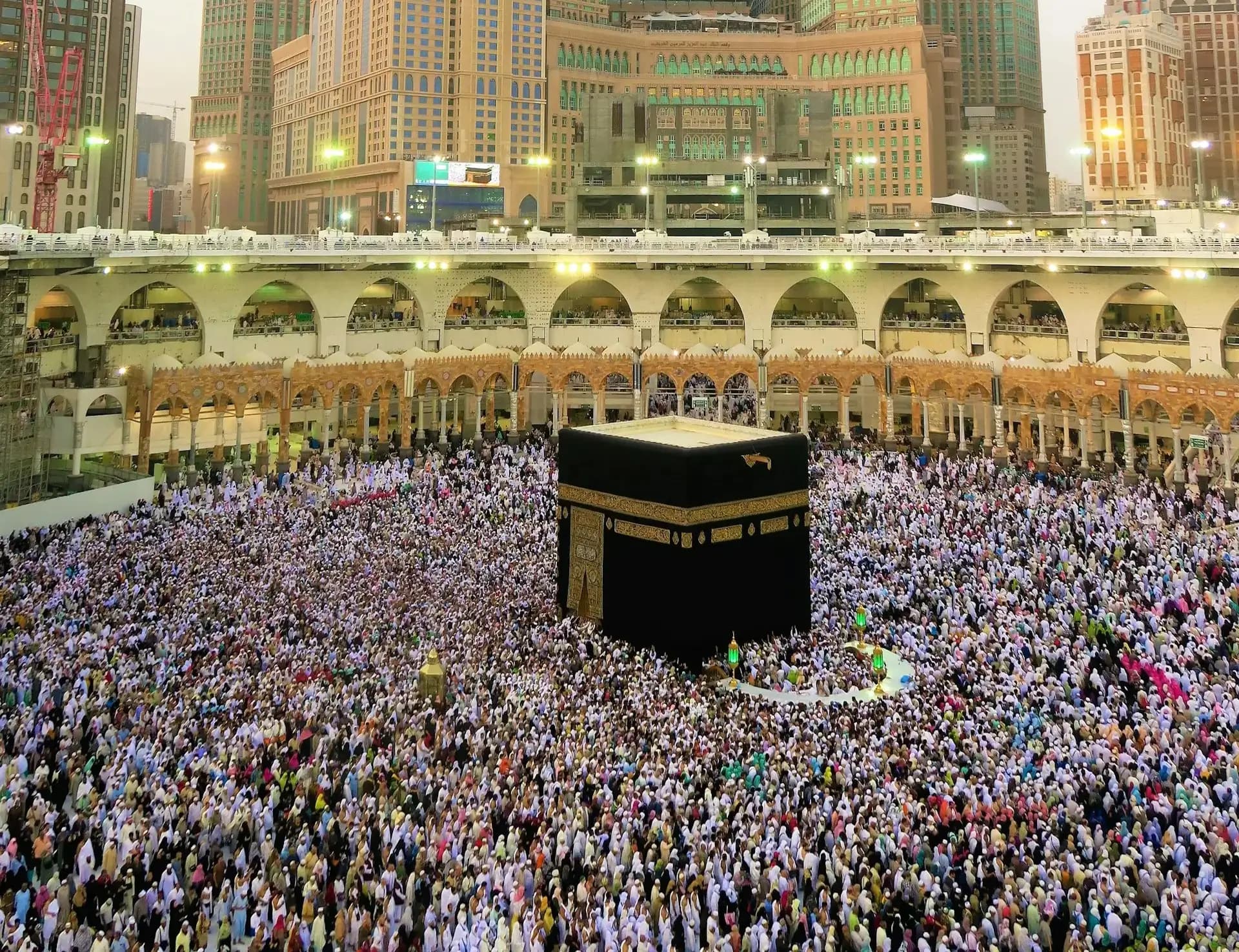
Crowds are one of the biggest factors affecting how long Umrah takes to complete.
When Masjid al-Haram is busy, movement during Tawaf can be slower, and reaching or leaving the Mataf area may take additional time. Sa'i can also take longer when the walkways between Safa and Marwah are crowded.
Umrah may therefore take longer during:
Ramadan, particularly the last ten nights
Weekends and other busy periods
School and public holiday periods
Times close to the Hajj season
Peak arrival periods for international pilgrims
An Umrah that takes around 2–3 hours during quieter conditions could take considerably longer when the Haram is heavily crowded.
How Long Does Umrah Take for Beginners?
For a first-time pilgrim, allowing around 3–4 hours or more is generally more practical than planning around the shortest possible completion time.
Beginners may need additional time to:
Find entrances and navigate Masjid al-Haram
Understand where each ritual begins and ends
Perform Tawaf at a comfortable pace
Locate Safa and Marwah for Sa'i
Take short rest or hydration breaks
Reach an appropriate place for Halq or Taqsir
First-time pilgrims should familiarise themselves with the Umrah sequence before arriving in Makkah. Knowing what comes next can reduce confusion and unnecessary delays. Hajj Umrah Planner provides practical information to help pilgrims prepare for their sacred journey.
There is no benefit in rushing simply to complete Umrah within two hours. Allow enough time to perform the rites correctly and calmly.
Does Salah Affect How Long Umrah Takes?
Yes. Congregational prayer times can add to the overall duration of Umrah.
If the obligatory prayer begins while you are performing Tawaf or another part of your worship, movement and access arrangements within Masjid al-Haram may change temporarily.
Rather than treating this as an unwanted delay, pilgrims should build flexibility into their schedule and plan around the daily prayers where practical.
If your Umrah overlaps with one or more Salah times, the total duration may therefore exceed the usual 2–4 hour estimate.
How Long Does Umrah Take for Elderly or Less Mobile Pilgrims?
Elderly pilgrims and people with limited mobility may need more than 4 hours, depending on their individual circumstances and the level of assistance required.
Tawaf and Sa'i involve substantial walking. A pilgrim who needs regular breaks, uses a wheelchair, or requires assistance should allow additional time rather than relying on timings for a healthy adult walking continuously.
The priority should be safety and completing the rites according to one's ability, not matching another person's completion time.
Does Performing Umrah With Children Take Longer?
Families performing Umrah with young children should also plan for additional time.
Children may need rest, food, toilet breaks, or assistance moving through crowded areas. Parents may therefore find that Tawaf and Sa'i take longer than the typical estimates.
A flexible schedule is especially useful for families. Avoid planning another time-sensitive activity immediately after you expect to finish Umrah.
How Long Does Umrah Take During Ramadan?
Umrah during Ramadan can take longer than the usual 2–4 hours because Masjid al-Haram has much heavier crowds, especially in the evenings and during the last ten nights.
Tawaf is often the most affected by crowd density. However, Sa'i, entrances, exits, and movement around the Haram can also take extra time.
Therefore, no fixed number of hours applies throughout Ramadan. Pilgrims should allow a generous time window and expect the duration to vary by day and time.
Does the Time of Day Make a Difference?
Yes. Crowd levels inside Masjid al-Haram change throughout the day, so the time you begin Umrah can influence how quickly you complete it.
However, no single time is guaranteed to be quiet. Conditions can change due to prayer times, seasons, organised group movements, and the number of pilgrims present.
Instead of relying on a promised “least crowded” time, check current conditions locally and keep your schedule flexible.
Should You Rush to Complete Umrah Quickly?
No. The 2–4 hour estimate is useful for planning, but it should not become a target that causes you to rush your worship.
Take the time you reasonably need for Tawaf, Sa'i, dua, Salah, rest, and hydration. If your Umrah takes longer than expected because of crowds, physical needs, or prayer times, that does not mean something has gone wrong.
For practical planning, set aside at least half a day around your Umrah rather than scheduling important activities immediately before or after it.
How Many Days Do You Need for an Umrah Trip?
While the Umrah rituals themselves usually take around 2–4 hours, the complete Umrah journey requires several days when you include flights, airport procedures, accommodation, rest, and travel within Saudi Arabia.
For many international pilgrims, a 7–10 day Umrah trip provides a comfortable amount of time. Shorter trips are possible, while pilgrims who want more time for worship or a visit to Madinah may stay for 10–14 days or longer.
Part of the Journey | Practical Time to Allow |
Main Umrah rituals | Around 2–4 hours |
Makkah stay | 3–5 days or more |
Madinah stay, if included | 2–4 days or more |
Makkah–Madinah transfer | Allow part of a day |
Typical overall trip | Around 7–10 days |
Longer spiritual stay | 10–14 days or more |
These are planning suggestions, not religious requirements. Islam does not require an Umrah trip to last a particular number of days.
How Long Should You Stay in Makkah for Umrah?
A stay of around 3–5 days in Makkah can give many pilgrims enough time to perform Umrah without making the entire trip feel rushed.
Since the rites may take only a few hours, you can use the remaining time for Salah in Masjid al-Haram, Tawaf, Qur'an recitation, dua, rest, and other acts of worship.
There is no prescribed minimum stay in Makkah specifically for Umrah. Your ideal length of stay will depend on your available time, budget, health, flights, and personal plans.
How Much Time Should You Allow for Madinah?
Visiting Madinah is not a ritual or requirement of Umrah. Still, many international pilgrims choose to include it in the same journey.
If Madinah is part of your itinerary, allowing around 2–4 days or more can make the visit more comfortable. This gives you time to worship at Al-Masjid an-Nabawi and do other planned activities without trying to fit everything into a single day.
Keep the distinction clear when planning your trip: your Umrah is performed in Makkah; visiting Madinah is a separate, highly valued visit.
How Long Does Travel Between Makkah and Madinah Take?
Travel time depends on the transport method, departure point, waiting time, and traffic.
The Haramain High Speed Railway can make the intercity journey much quicker than road travel. At the same time, coaches and private vehicles generally take longer.
For itinerary planning, it is safer to reserve part of a day for the transfer rather than scheduling important activities immediately before or after your journey.
How Long Does an Umrah Visa Take?
No single processing time applies to every pilgrim or every visa route.
The right visa route and processing time depend on your nationality, country of residence, eligibility, application method, documentation, and whether you are applying through an Umrah package or another eligible Saudi visa route.
For UK passport holders, Saudi Arabia currently lists the United Kingdom among the countries permitted to use its tourist eVisa system. The official Saudi eVisa terms state that successful eVisas are issued electronically by email.
The official Nusuk Umrah platform also offers packages that include visa issuance, as well as packages without a visa for travellers who already have an appropriate visa or otherwise qualify. Nusuk states that its platform operates under the supervision of the Saudi Ministry of Hajj and Umrah.
Because official sources do not provide a guaranteed processing period that applies to every application, avoid assuming an Umrah visa will always take a fixed number of hours or days.
If you are asking how long it takes to get an Umrah visa from the UK, check your eligibility and current requirements before booking non-refundable travel.
How Far in Advance Should You Arrange Your Visa?
Apply early enough to allow time for document checks, corrections, processing, and unexpected delays.
Do not plan your journey assuming approval will be immediate. Before travelling, confirm that your visa has been issued and check its conditions, validity, and permitted stay.
Nusuk's current terms state that travellers who require an Umrah visa must obtain it in advance and can apply for an Umrah visa electronically when registering through the Nusuk Umrah platform.
How Long Does the Complete Umrah Journey Take?
It helps to separate performing Umrah from travelling for Umrah.
If someone asks, "How long does it take to do Umrah?", the answer is generally around 2–4 hours for the main rituals.
If they mean the complete international journey, a practical trip may last around 7–10 days, with longer stays of 10–14 days or more also common depending on the itinerary.
The key distinction is:
Umrah rituals = hours.
Umrah trip = days.
Keeping these two timeframes separate makes it much easier to plan flights, accommodation, transport, rest, and worship without rushing the sacred journey.
Complete Umrah Time Breakdown
For quick planning, the main Umrah rituals generally take around 2–4 hours. At the same time, the complete journey from the UK or another country usually lasts several days.
Stage | Estimated Time |
Ihram and intention | 15–30 minutes |
Tawaf | 45–90 minutes |
Sa'i | 45–90 minutes |
Halq or Taqsir | 15–30 minutes |
One complete Umrah | Around 2–4 hours |
Makkah stay | 3–5 days or more |
Madinah stay, if included | 2–4 days or more |
Typical overall Umrah trip | Around 7–10 days |
These are practical estimates, not fixed religious time limits. Crowd levels, mobility, Salah, rest breaks, season, and individual circumstances can make the actual duration shorter or longer.
Practical Tips for Planning Enough Time for Umrah
To avoid rushing your Umrah, keep these points in mind:
Allow at least 3–4 hours for the main rituals, even if you expect to finish sooner.
First-time pilgrims should allow extra time to navigate Masjid al-Haram.
Avoid scheduling a flight, transfer, or other time-sensitive activity immediately after Umrah.
Allow extra time when travelling with children, elderly pilgrims, or anyone with limited mobility.
Expect longer completion times during Ramadan and other busy periods.
Keep your schedule flexible around the five daily prayers.
Stay hydrated and take reasonable breaks when needed.
The purpose of estimating the duration is to plan comfortably, not to turn Umrah into a race against the clock.
Final Answer: How Long Should You Allow for Umrah?
If you only mean the Umrah rituals, allow approximately 2–4 hours under normal conditions. A first-time pilgrim should ideally plan for 3–4 hours or more so the rites can be completed without unnecessary rushing.
If you mean the whole Umrah trip, plan in days rather than hours. Around 7–10 days can work well for many international pilgrims, particularly when the itinerary includes both Makkah and Madinah.
Ultimately, there is no fixed time that every Umrah must take. Perform the rites correctly, worship at a comfortable pace, and keep enough flexibility for crowds, Salah, rest, and unexpected delays.